Based in Apeldoorn. Owner of Fundynamic. I've been writing code since I was ten — driven first by curiosity, and now by genuine love for the craft.
I work across the full stack, I care deeply about business value, and I've never been able to stop myself from building things just for the fun of it.
My primary depth is backend Java, with a particular strength in legacy systems — understanding them, untangling them, and knowing when to leave well enough alone. I've inherited codebases others were afraid to touch and made them testable, deployable, and maintainable without stopping the world.
I'm sceptical of complexity for its own sake. Microservices, distributed systems, event-driven architecture — I know these patterns well enough to know when not to reach for them. The question "does our scale actually require this?" is asked far too rarely. Only at very large scale do these things start to pay for themselves. Most systems don't need to be as complicated as they are, and cutting that clutter is often the most valuable thing an architect can do.
If the frontend is where the value needs to happen, I'll go there — with honesty about where I'm stronger, and enough experience to be useful rather than a liability.
My philosophy: shipping the right thing matters more than perfecting the wrong one. A working solution that solves the real problem beats an elegant solution to an imagined one. That said — quality is not optional once you know what you're building. The goal is always both: the right thing, built well.
These are the most honest expression of who I am as a developer. No client brief, no deadline, no product manager — just a problem worth solving and the drive to see it through.
Dune II was the game that made me want to program. Playing it as a kid — watching the credits roll, wondering how it all worked — set everything in motion.
D2TM is a ground-up remake with higher resolutions, zooming, multi-select, and skirmish play. I've handled the code, the graphics, the game design, and the UX. It's been running for over two decades and I still actively develop it.
It's the clearest expression of why I do this work: the craft itself is genuinely enjoyable, and shipping something that other people play is deeply satisfying.
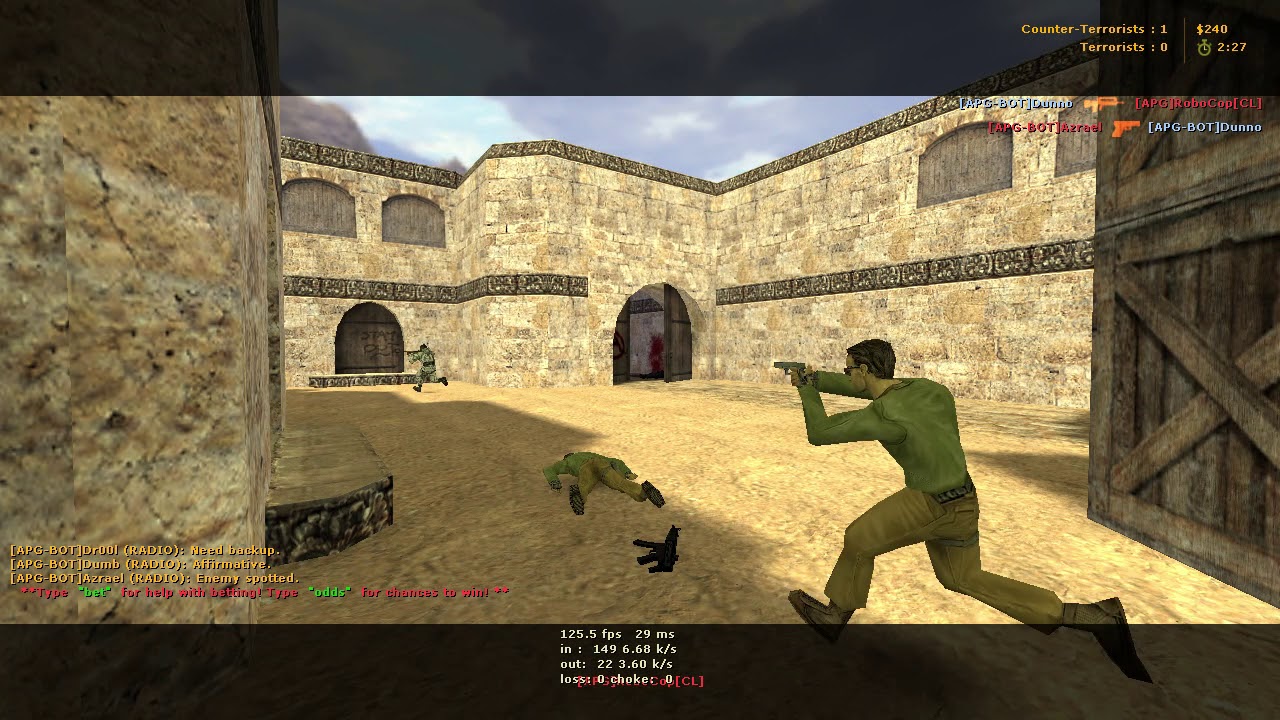
An AI opponent for Counter-Strike 1.6, built as a Metamod plugin. It navigated 3D maps without pre-built waypoints and learned from human players — which, at the time, was genuinely unusual.
It was awarded Best Counter-Strike Bot in 2002. The site was offered hosting on counter-strike.net after traffic spiked — peaking at 25,000 visitors in a single day.
From founding my own companies to working inside some of the best-regarded tech organisations in the Netherlands.
The name is intentional. Software is dynamic by nature — it changes, it evolves, requirements shift, code gets rewritten. A lot of people find that stressful. I find it energising. Fundynamic: because the fluid, ever-changing nature of software development should be something you lean into, not something you fight.
I work with clients across the full stack — architecture, development, process — wherever the real value needs to happen.
Fundynamic is the vehicle through which I've worked with startups still finding their feet and scale-ups untangling years of fast growth. The through-line is always the same: deliver the right thing, with enough quality to sustain it.
Co-founded with a small group of experienced developers who were tired of average. Kaizen — Japanese for continuous improvement — applied to everything: code, team dynamics, client relationships.
Selective about clients, serious about craft. We also invested time in our own ventures — and learned more from what didn't work than from what did.
A few clients worth highlighting — each one for a different reason.
Q42 has built products used by virtually every person in the Netherlands — Nederlandse Loterij, Philips Hue, PostNL, Rijksmuseum. Their bar for entry is high, and they work closely with Google.
I worked on Nederlandse Loterij and Rijksmuseum in C#, quickly productive in a stack that was relatively new to me. Getting in and staying effective there is a signal in itself.
Xebia built its reputation on Agile, software craftsmanship, and a relentless focus on quality — long before those words became marketing. Getting in required passing a genuine technical bar.
I worked on their in-house development during what was one of the most engaging periods of my career. The environment was demanding and collegial in equal measure — exactly the kind of place where you sharpen your craft. The recommendations I received there reflect that.
A deliberately different kind of engagement. Maxeda — parent of Praxis and Brico, 330+ stores across the Benelux — needed process more than code. I came in as Scrum Master and coach: increasing transparency, improving team reliability, making delivery more predictable.
In three months I made a meaningful impact on how the team worked — then left for Q42 when the opportunity arose. It's the engagement I point to when someone asks whether I can deliver value without writing a single line of code.
Before software, I studied to become a primary school teacher — and that instinct never left. Over the years I've organised code retreats, run TDD sessions, and built Agile workshops, because sharing what works is as important as doing it.
Organised and facilitated multiple GDCRs across the Netherlands — Amsterdam, Houten — with up to 45 participants. Deliberate practice, TDD, learning from each other.
Developed and delivered a full-day Agile workshop — co-created with Dorus Verhoeckx from Mirabeau, and run at multiple companies. Practical, no-nonsense, focused on real behaviour change rather than ceremony.
Informal evenings: bring the pizza, bring the curiosity. Introducing developers to test-driven development in a low-pressure, high-fun setting.
"Stefan is a joy to work with. He is sharp and always keeping business value in the back of his mind. He is not afraid to take a step back and ask: 'Why are we doing this?'"— Ric Klaren, Cloud Architect at Hypori Virtual Mobility
That instinct — stopping before building and asking why — is what the Maxeda story in the experience section illustrates.
"Stefan is a true software craftsman. Not only does he have good technical knowledge, he also is fun to work with and keeps a keen eye on the end result."— Bart Kiers, Software Engineer at Q42
Written during Stefan's time at Q42 — where the technical bar is set deliberately high.
These are two of several recommendations. The others are on LinkedIn — including more technical ones I'd encourage you to read before reaching out.
If you're working on something and need someone who cares about value, quality, and getting things done — I'd like to hear about it.